Anatomy and Physiology > Engage Fundamentals Rn | Posted by Cleveland on April 10, 2026
Question:
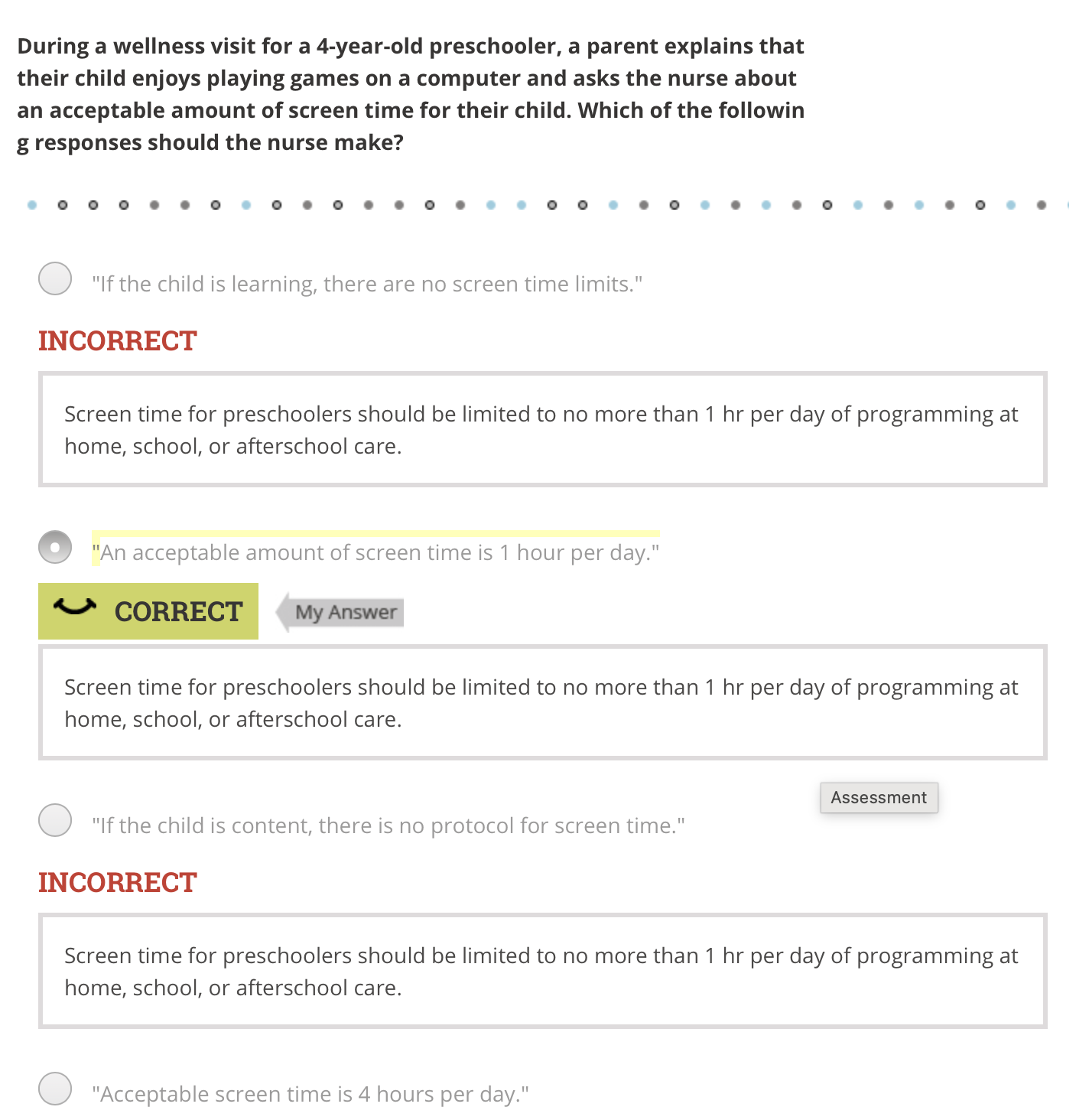
During a wellness visit for a 4-year-old preschooler, a parent explains that their child enjoys playing games on a computer and asks the nurse about an acceptable amount of screen time for their child. Which of the followin g responses should the nurse make?
"If the child is learning, there are no screen time limits."
"An acceptable amount of screen time is 1 hour per day."
"If the child is content, there is no protocol for screen time."
"Acceptable screen time is 4 hours per day."
Answer:
✔️ "An acceptable amount of screen time is 1 hour per day."
Question:
A nurse is caring for adolescents in a school-based health clinic. Which of the following client statements should the nurse recognise as an indication that the client is experiencing Erikson's stage of identity versus role confusion?
"I'm coaching a little league team."
"I think I might be gay."
"I can't seem to do anything right for my parents."
Assessment
"Why would someone want to help me? What's in it for them?"
Answer:
✔️ "I think I might be gay." 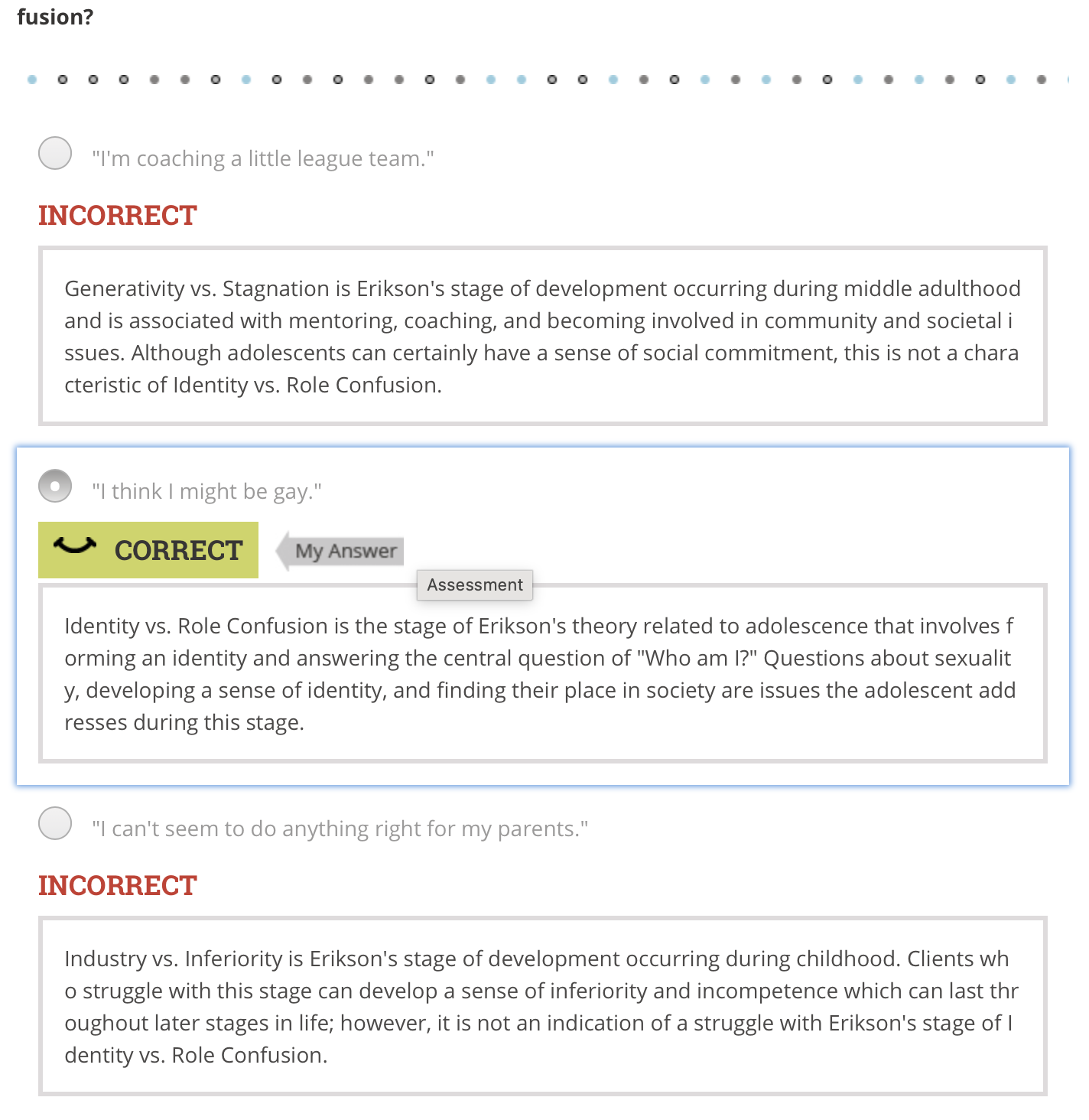
Question:
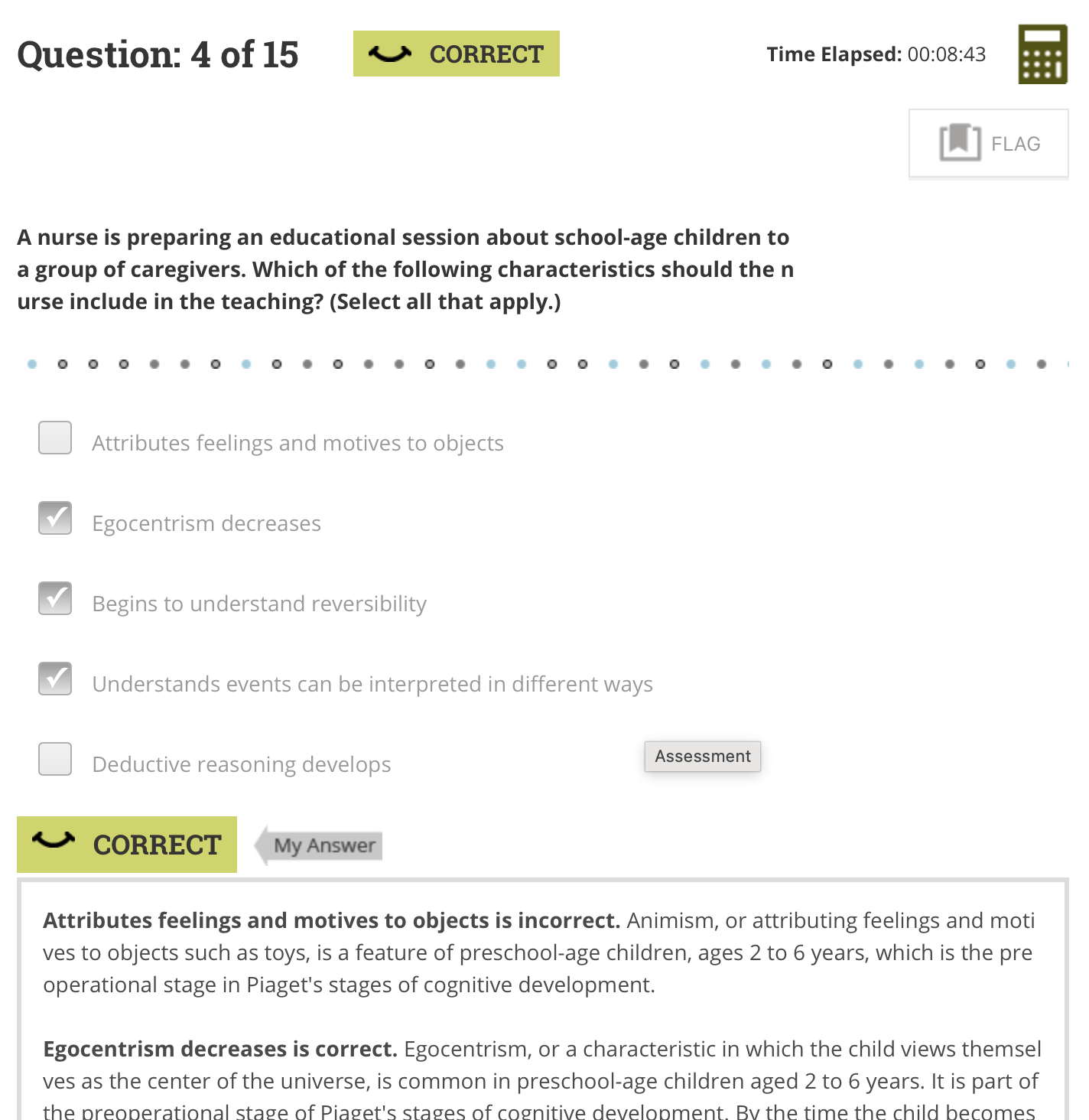
A nurse is preparing an educational session about school-age children to a group of caregivers. Which of the following characteristics should the n urse include in the teaching? (Select all that apply.)
•
Attributes feelings and motives to objects
Egocentrism decreases
Begins to understand reversibility
Assessment
Understands events can be interpreted in different ways
Deductive reasoning develops
Answer:
Question:
A nurse is assessing an adolescent who reports feeling "very depressed." The nurse should recognize that which of the following are signs of increa sed risk for suicide? (Select all that apply.)
.. °
•
Expressing feelings of gloom and helplessness
Expressing loss of interest in activities once considered important
Making threats of self-harm
Having access to weapons
Purchasing valued possessions
Answer:
✔️ Expressing feelings of gloom and helplessness
✔️ Expressing loss of interest in activities once considered important
✔️ Making threats of self-harm
✔️ Having access to weapons 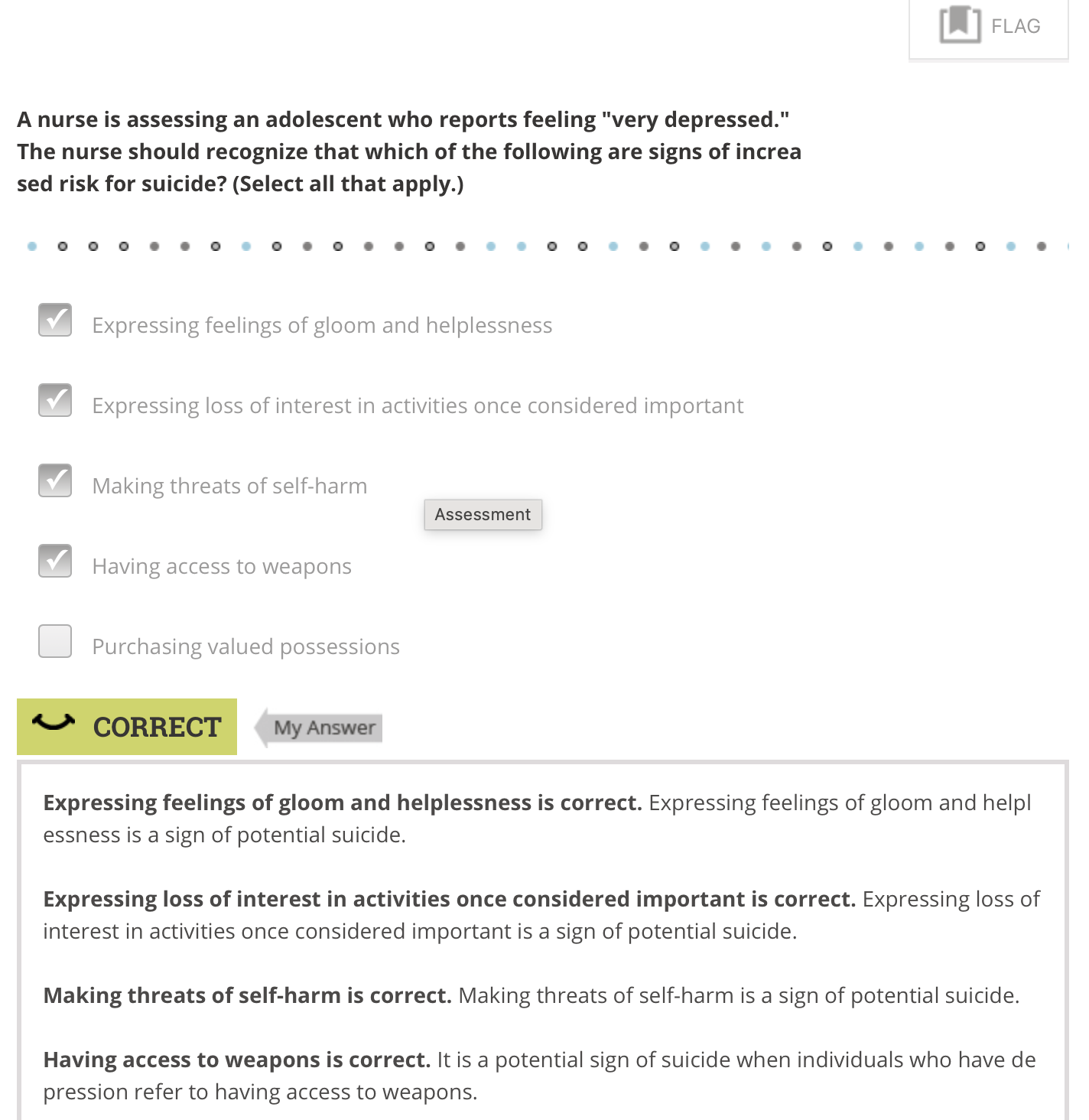
Question:
Weight management
✔️ Glucose testing
✔️ Daily exercise
✔️ Foot care 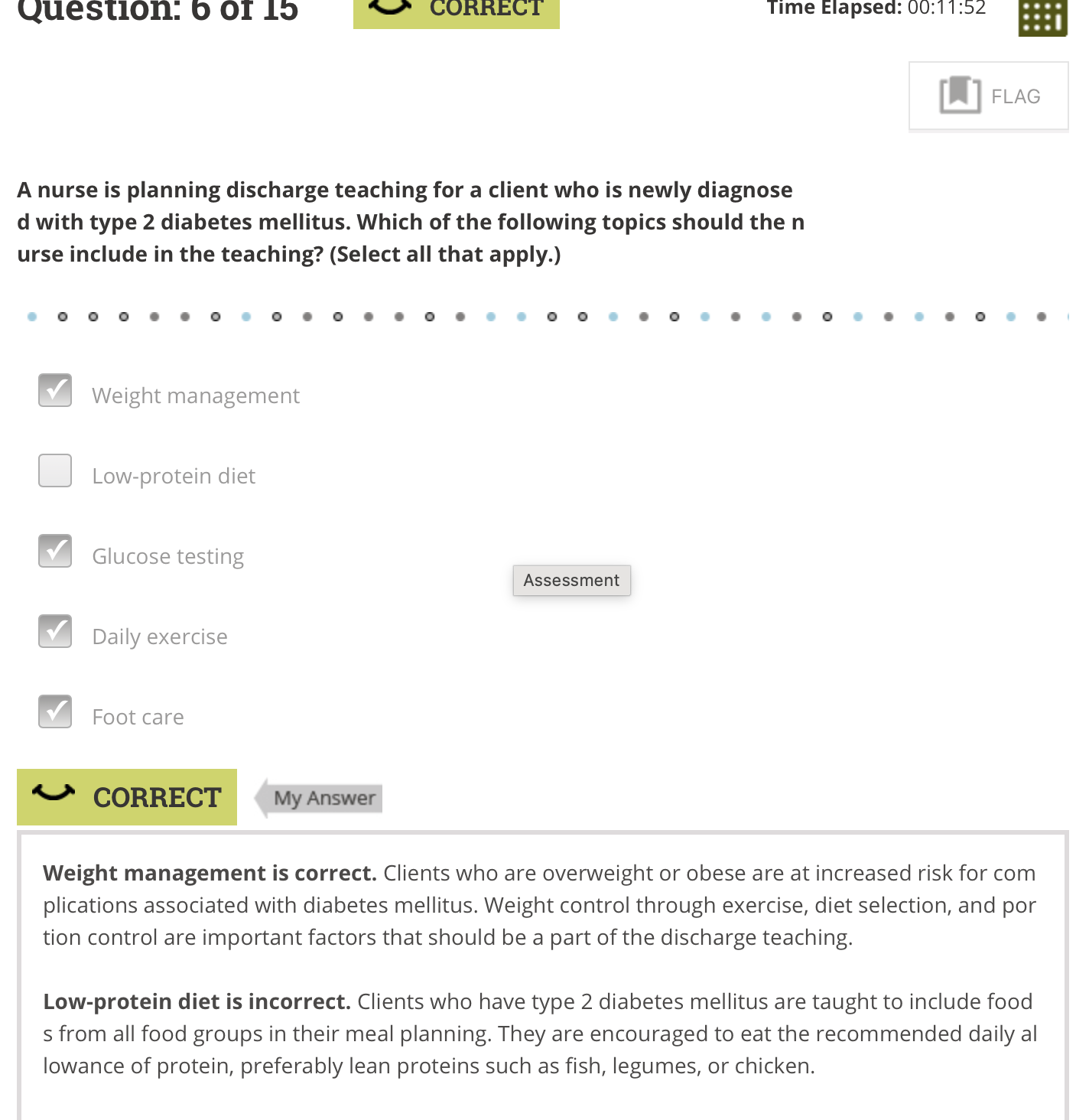
Answer:
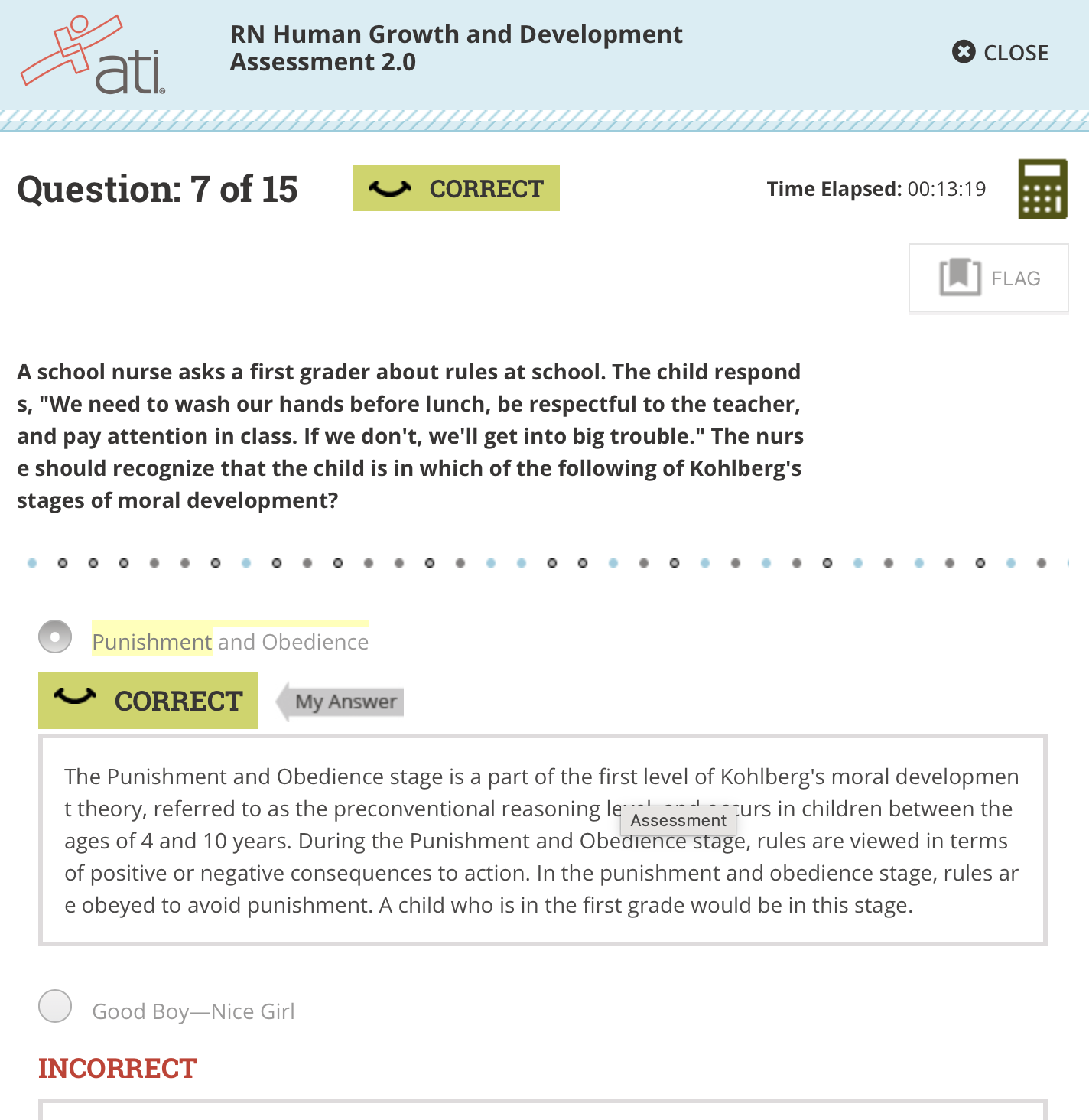
Punishment and Obedience
Question:
A nurse is providing an educational session on cognitive development at a community event. Which of the following statements by the nurse are c onsistent with Piaget's theory of cognitive development?
(Select all that a pply.) "Individuals acquire knowledge, intellect, and cognition over time." "Intelligence is a natural ability that develops as a child grows and adapts to their environmen t." "Children construct knowledge that evolves and changes over time."
"Children construct knowledge in new ways at critical points during development."
"Adolescents achieve formal operational thought by 16 years of age."
Answer:
"Individuals acquire knowledge, intellect, and cognition over time."
✔️ "Intelligence is a natural ability that develops as a child grows and adapts to their environment."
✔️ "Children construct knowledge that evolves and changes over time."
✔️ "Children construct knowledge in new ways at critical points during development."
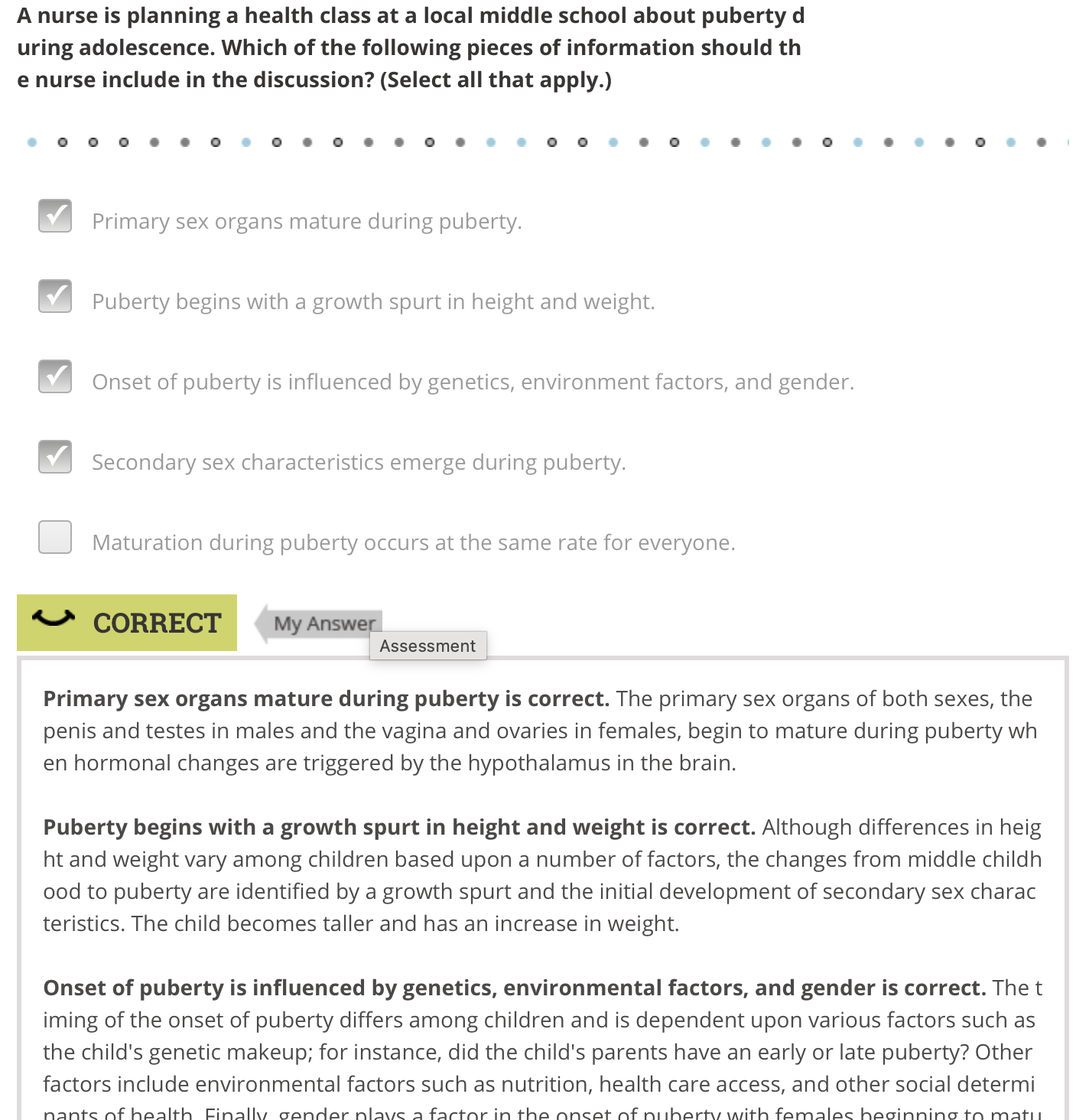
Question:
A nurse is planning a health class at a local middle school about puberty d uring adolescence. Which of the following pieces of information should th e nurse include in the discussion? (Select all that apply.)
• Primary sex organs mature during puberty.
_ Puberty begins with a growth spurt in height and weight.
• Onset of puberty is influenced by genetics, environment factors, and gender.
Secondary sex characteristics emerge during puberty.
Maturation during puberty occurs at the same rate for everyone.
Answer:
Primary sex organs mature during puberty.
✔️ Puberty begins with a growth spurt in height and weight.
✔️ Onset of puberty is influenced by genetics, environmental factors, and gender.