
ATI Questions > RN Genitourinary System Assessment | Posted by Cleveland on May 18, 2026
Question:
A nurse is caring for a client on an inpatient medical-surgical unit. Which of the following statements by the client's guardian indicate further teaching is needed? Select all that apply.
. "The most serious potential complication prior to the surgery is tumor rupture."
My child will need life-long blood pressure medication."
My child will not require radiation or chemotherapy."
The surgeon will first biopsy the tumor and then remove the kidney."
My child will not be able to play football."
No one should push on my child's abdomen
Answer:

Question:
A nurse is caring for a client on an inpatient medical-surgical unit. For each client finding, click to specify if the finding will increase, decrease, or experience no change based on the nurse's suspected diagnosis. There must be at least 1 selection in every row. There does not need to be a selection in every column.
Answer:
Increase: Creatinine, Potassium, Weight, Blood pressure
Decrease: eGFR
No Change: Temperature

Question:
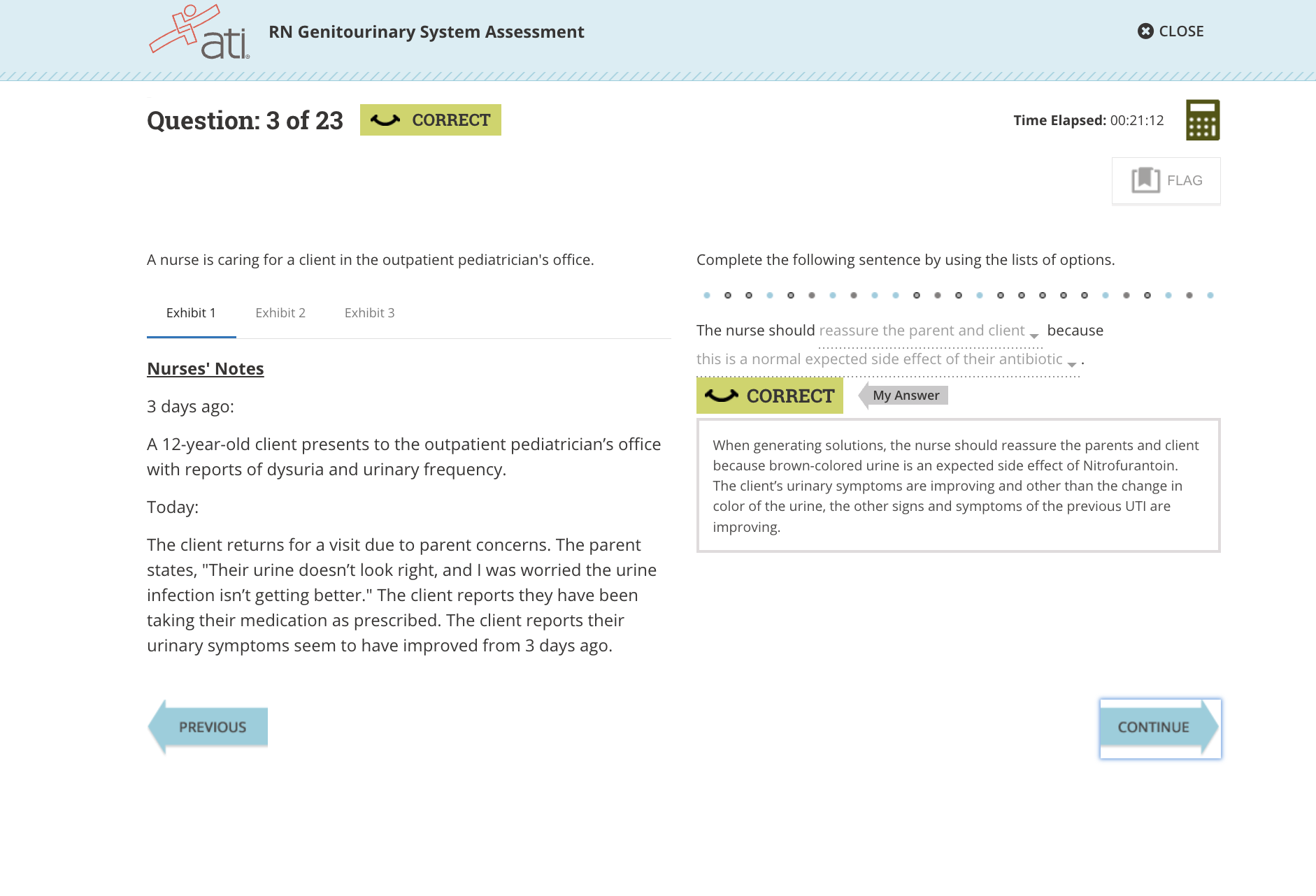
A nurse is caring for a client in the outpatient pediatrician's office. Complete the following sentence by using the lists of options.
The nurse should ___________________ because __________________.
Answer:
reassure the parents and client;
this is a normal expected side effect of their antibiotic
Question:
A nurse is caring for a client diagnosed with pyelonephritis. Which of the following complications may occur if the current antibiotic treatment is ineffective at treating the bacterial infection?
Answer:
Urosepsis

Question:
A nurse is caring for an adolescent client with chronic kidney disease during a routine follow-up. The client's caregiver reports that the client has been eating at fast food restaurants with friends almost daily for the past month. Which of the following responses demonstrates the nurses' awareness of the client's developmental stage?
Answer:

Question:
A nurse is teaching the caregiver of a school-aged child who experiences recurrent UTis. Which of the following recommendations should the nurse include in the teaching
Answer:
Encourage multiple trips a day to the bathroom.

Question:
A nurse caring for a client diagnosed with nephrotic syndrome (NS) understands that the edema is caused by a series of physiologic changes. Identify the following physiologic manifestations of NS in order. (Move the steps into the box on the right, placing them in the order of performance. Use all the steps.)
Answer:
1. Glomerular basement membrane permeability
2. Proteinuria and hypoalbuminemia
3. RAAS activation
4. Sodium and water retention

Question:
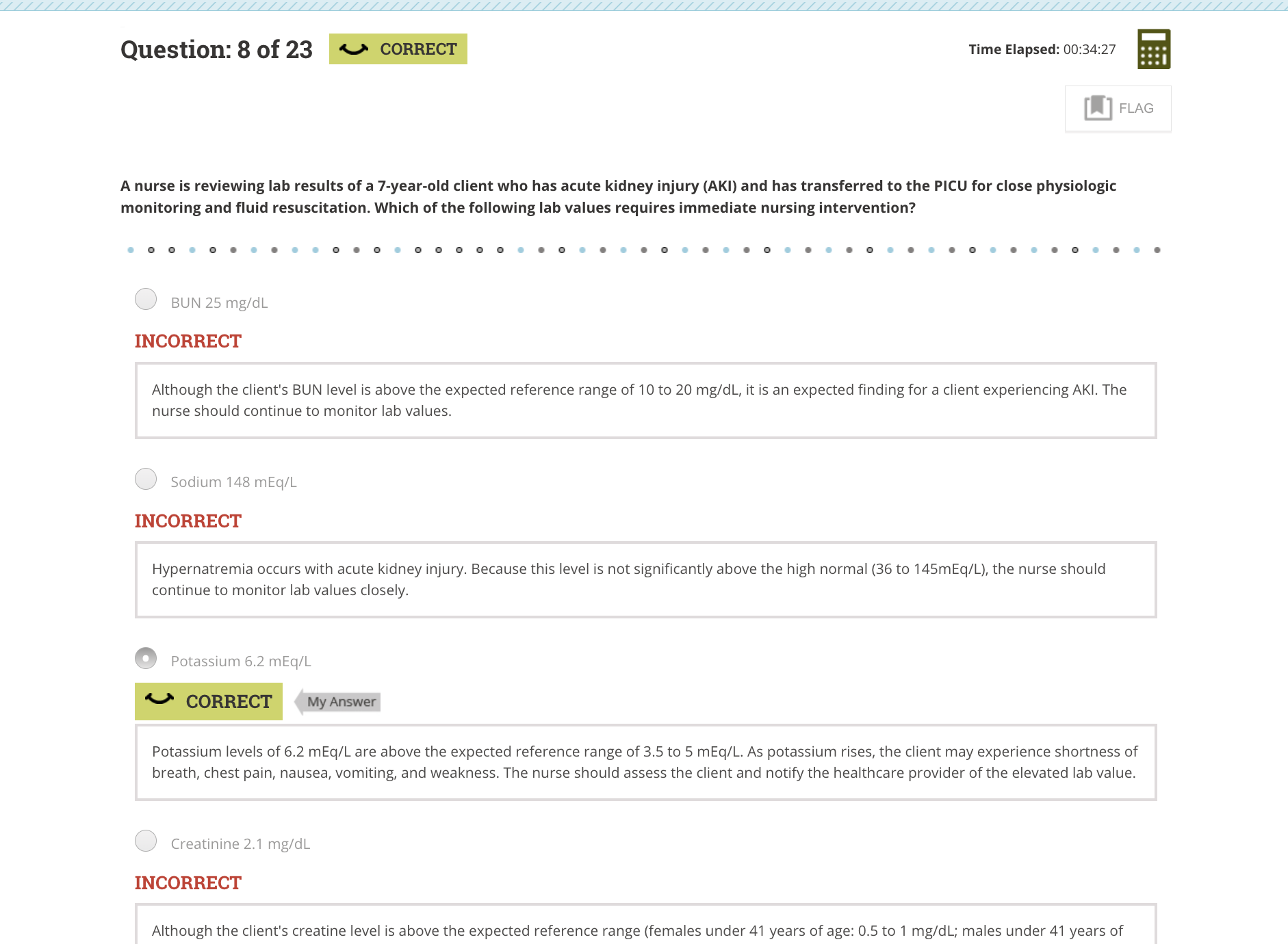
A nurse is reviewing lab results of a 7-year-old client who has acute kidney injury (AKI) and has transferred to the PICU for close physiologic monitoring and fluid resuscitation. Which of the following lab values requires immediate nursing intervention?
Answer:
Question:
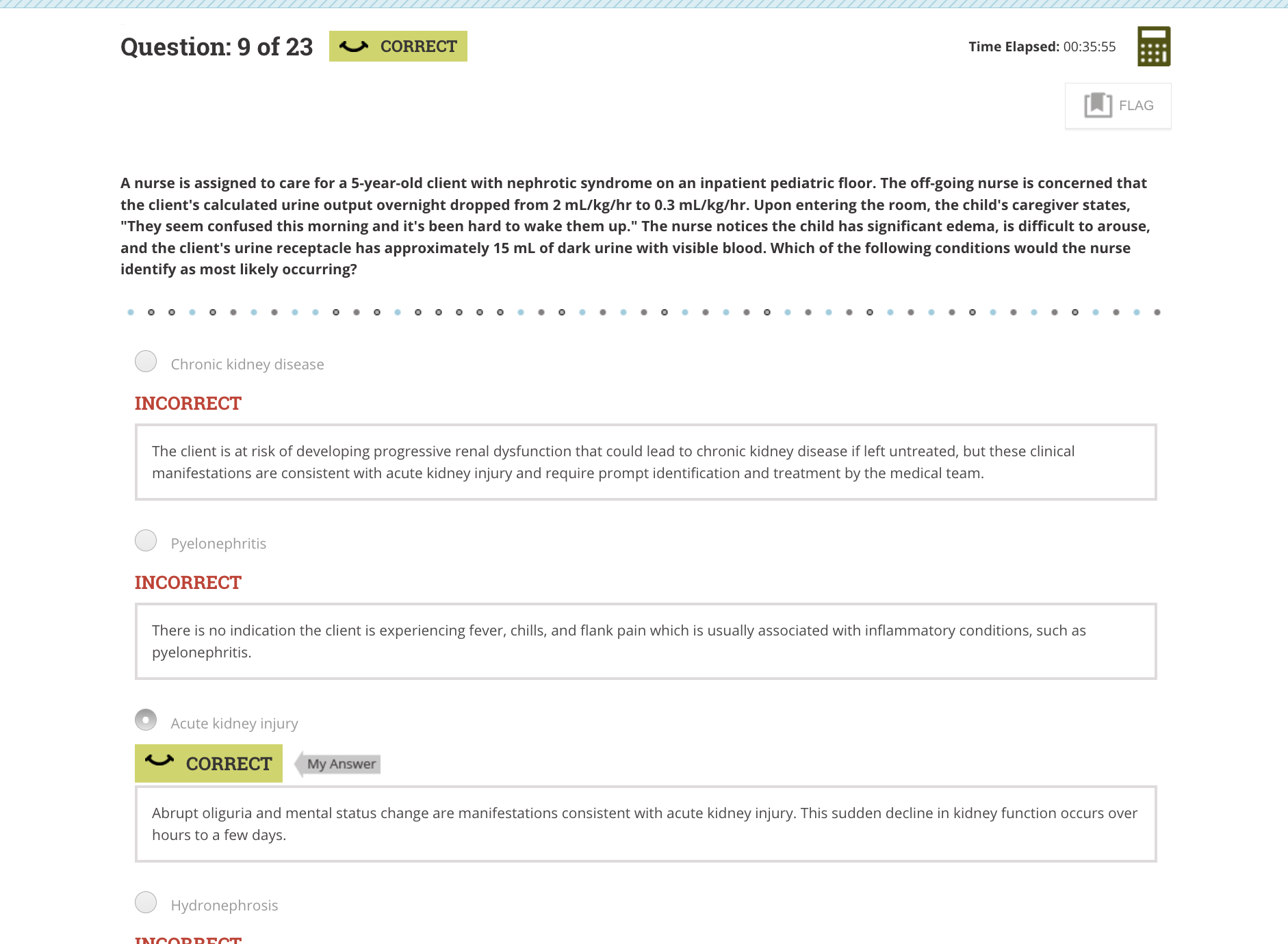
A nurse is assigned to care for a 5-year-old client with nephrotic syndrome on an inpatient pediatric floor. The off-going nurse is concerned that the client's calculated urine output overnight dropped from 2 ml/kg/hr to 0.3 mL/kg/hr. Upon entering the room, the child's caregiver states, "They seem confused this morning and it's been hard to wake them up." The nurse notices the child has significant edema, is difficult to arouse, and the client's urine receptacle has approximately 15 mL of dark urine with visible blood. Which of the following conditions would the nurse identify as most likely occurring
Answer:
Question:
A nurse is preparing to administer oral prednisolone to a 7-year-old client with nephrotic syndrome and weighs 25 kg (55 lb). The prescribed dose is 1 mg/kg, and the oral suspension amount available is 15 mg/5 mL. How many mL should the nurse administer? (Round the answer to the nearest decimal place. Use a leading zero if it applies. Do not use a trailing zero.)
Answer:

Question:
A nurse is preparing to administer acetaminophen to a 4-year-old client. The client weighs 15k g (33 lb). The prescribed dose is 10 mg/kg q4h PRN mild pain. The amount available is 160 mg/5 mL. How many mL should the nurse administer? (Round the answer to the nearest decimal place. Use a leading zero if it applies. Do not use a trailing zero.)
Answer:
4.7

Question:
A nurse is caring for an adolescent client who presents to the clinic with single-sided swelling in the scrotum. Which of the following additional clinical manifestations would indicate to the nurse that the client might have testicular cancer? (Select all that apply.)
a. Erythematous scrotum
b. Dull ache in the scrotum
c. Scrotal heaviness
d. Palpable testicular mass
e. Dysuria
Answer:
B, C, D

Question:
A nurse is providing discharge education to a client recovering from nephrotic syndrome (NS) and their caregiver. Which of the following caregiver statements indicates an understanding of the teaching in preventing chronic kidney disease for the client? (Select all that apply.)
a. "We will perform daily urine dipsticks to check for protein."
b. "We will continue limiting salt and potassium in the diet."
c. "We will limit the amount of calcium in the diet."
d. "We only need to follow up with our pediatrician."
e. "We will provide protein shakes to promote growth."|
Answer:
A
B

Question:
A nurse is assessing a 5-year-old client whose caregiver brought them to the clinic for fever and reports of abdominal pain. Which of the following clinical manifestations would prompt the nurse to obtain a urine sample? (Select all that apply.)
a. The parent reporting the child eating approximately 1500 calories a day
b. No bowel movement in 3 days, which is unusual
c. White vaginal discharge
d. Child rubbing their back
e. Urinary frequency
Answer:
B
D
E

Question:
A nurse is reviewing the medical history of a 17-year-old client who presented to the clinic after feeling a lump in their right testicle. Which of the following risk factors places the client at a higher risk for developing testicular cancer?
Answer:

Question:
A nurse is creating a plan of care for a 2-year-old client with Wilms tumor. Which of the following interventions encourages mastery of the client's psychosocial development stage? (Select all that apply.)
a. Encourage simple choices, such as toy and food selections.
b. Allow the client to perform oral care independently.
c. Allow the client to bathe independently.
d. Encourage exploration of medical equipment such as stethoscopes.
e. Take a daily trip to the playroom for unstructured play
Answer:

Question:
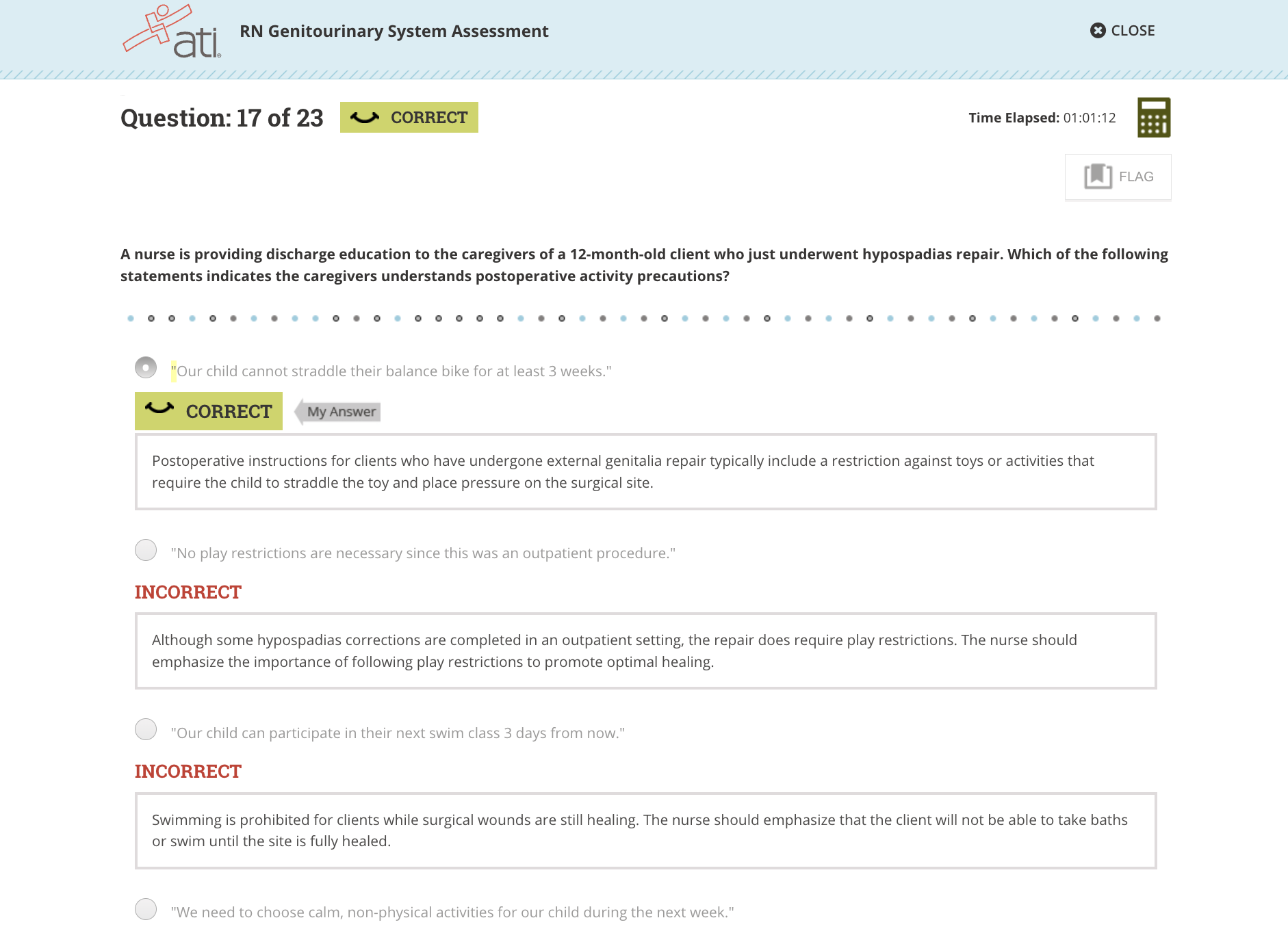
A nurse is providing discharge education to the caregivers of a 12-month-old client who just underwent hypospadias repair. Which of the following statements indicates the caregivers understands postoperative activity precautions?
Answer:
Question:
A nurse is assessing a client who presented to the clinic with a 2-day history of urinary frequency and dysuria. Which of the following medical conditions documented in the client's medical history contributes to bacterial growth in the genitourinary (GU) tract?
Answer:

Question:
A nurse is providing disease education to the caregiver of a 5-year-old client diagnosed with strep throat. To encourage the client's caregiver to finish the client's antibiotic treatment, which of the following renal conditions should the nurse include in the teaching that will decrease once they complete the treatment?
Answer:
Acute glomerulonephritis

Question:
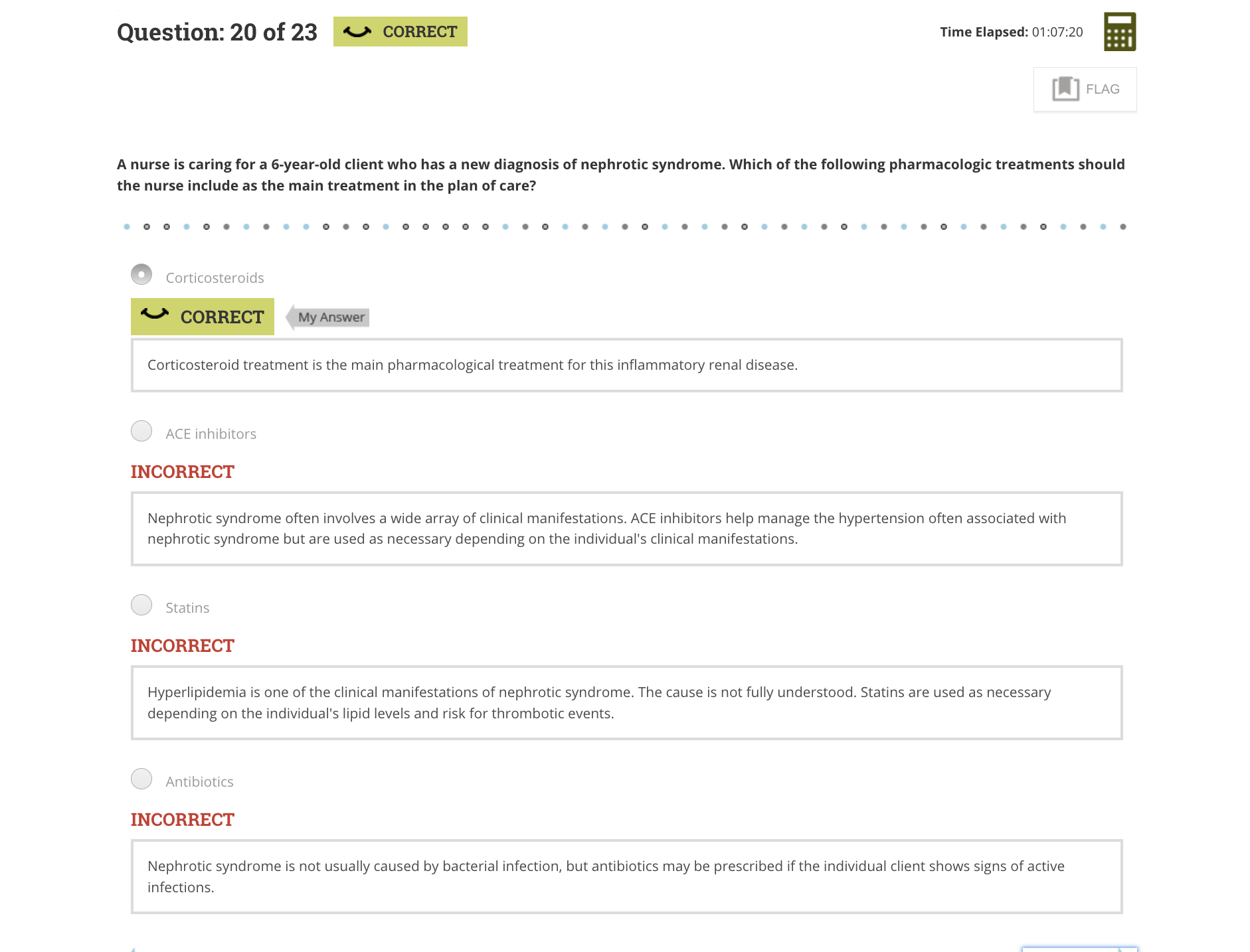
A nurse is caring for a 6-year-old client who has a new diagnosis of nephrotic syndrome. Which of the following pharmacologic treatments should the nurse include as the main treatment in the plan of care?
Answer:
Question:
A nurse is teaching a school-age client and their caregiver how to perform a clean-catch vaginal urine specimen. Identify the sequence the client and caregiver should follow. (Move the steps into the box on the right, placing them in the order of performance. Use all the steps.)
Answer:

Question:
A nurse is caring for a newborn in the delivery room and visually notices the urinary meatus is located on the ventral aspect of the penile shaft. Which of the following physical assessment findings commonly develop in conjunction with this deviation?
Answer:
Dorsal hood

Question:
A nurse is caring for a newborn client, who was born at 40 weeks, 1 day gestation without labor or delivery complications. The prenatal ultrasound showed evidence of hydronephrosis. Which of the following conditions are associated with this pathophysiology? (Select all that apply.)
a. Bladder exstrophy
b. Cryptorchidism
c. Vesicoureteral reflux (VUR)
d. Genitourinary obstruction
e. Phimosis
Answer:
